


Why Your Lower Back Pain Keeps Coming Back — A TCM Perspective
Most people treat lower back pain the way they treat a fire alarm — they silence it and go back to what they were doing. A painkiller, a few days of rest, maybe a visit to a physiotherapist. The pain eases. They move on. And then, months later, it returns. A little worse this time. A little harder to shift.
In Traditional Chinese Medicine, this pattern is not a mystery. It is a predictable consequence of treating the branch while ignoring the root.
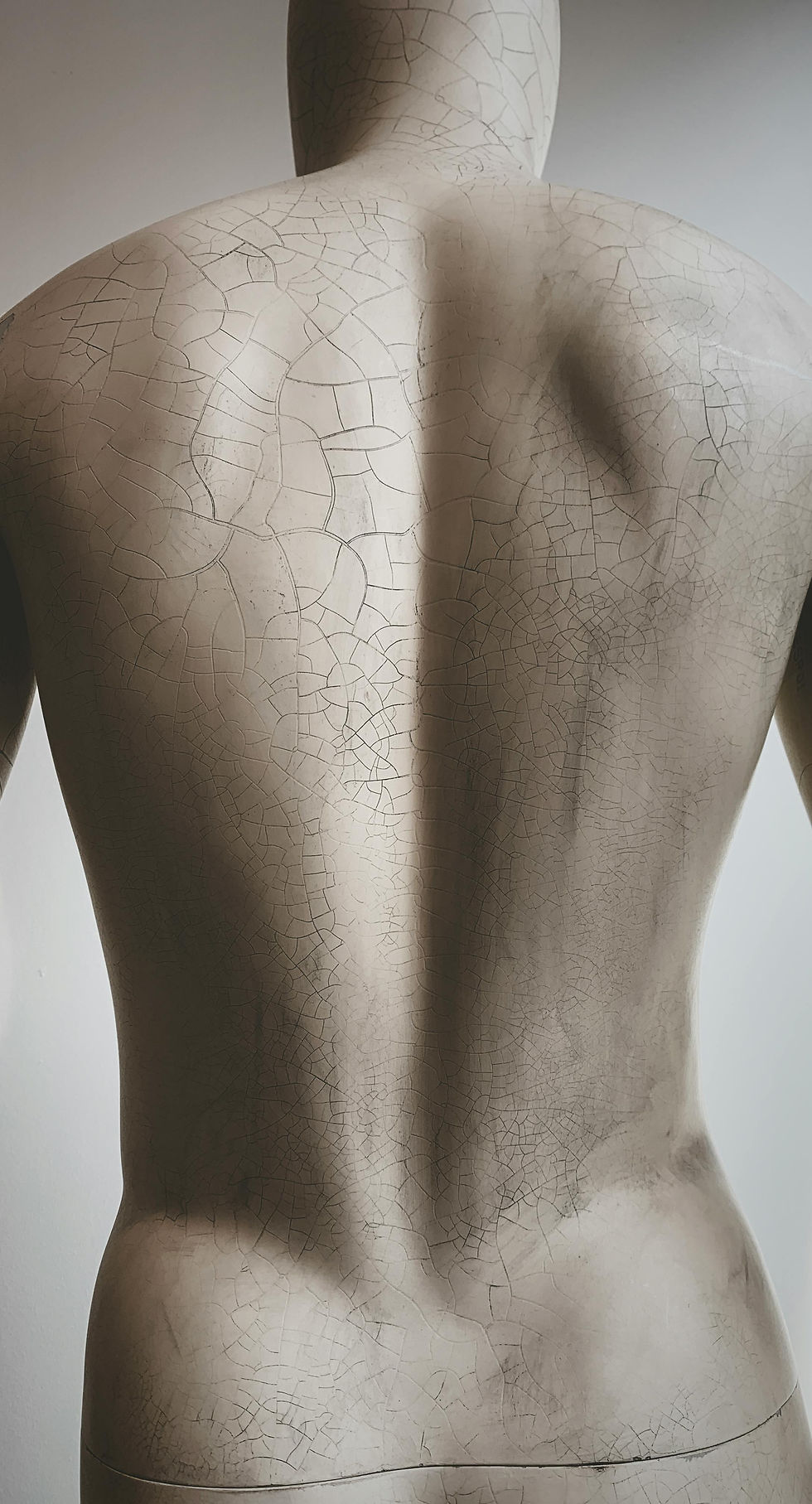
Lower Back- area of the Kidneys
In TCM, every region of the body has an organ system governing it. The lower back belongs to the Kidneys. This is stated plainly in classical texts: the lower back is the "mansion of the Kidneys." When the Kidneys are strong, the lower back is supported, supple, and pain-free. When the Kidneys weaken, the lower back is the first place to feel it.
This is not metaphor. The Kidney meridian runs through the lumbar spine. Kidney Qi and Kidney Essence — Jing — provide the deep nourishment that keeps the bones, marrow, and connective tissue of the spine vital and resilient. When that nourishment diminishes, the tissue loses its integrity. The structure becomes vulnerable. Pain follows.
How the Kidneys Become Depleted
The Kidneys store Jing — our deepest constitutional reserve, inherited at birth and slowly spent across a lifetime. Jing is not easily replenished. It is depleted by overwork, chronic stress, insufficient sleep, excessive sexual activity, too many pregnancies too close together, long-term illness, and pushing the body beyond its natural limits year after year without adequate recovery.
Sound familiar?
We live in a culture that celebrates achievements, efficiency therefore pushes us towards exhaustion. Long working hours, broken sleep, relentless output, chronic anxiety. Every one of these habits draws on the Kidney reserve. Over years, sometimes decades, the reserve runs low. The body begins to show it — and the lower back is often the first visible sign.
Cold is another major factor. The Kidneys are deeply sensitive to Cold. Sitting on cold surfaces, exposing the lower back to draughts, spending winters inadequately dressed — all of these allow Cold to penetrate into the lumbar region, constricting Qi and Blood flow, stiffening the tissues, and laying the groundwork for chronic pain that worsens in cold weather and improves with application of warmth.
Acute Pain vs. Chronic Pain — A TCM Distinction
In TCM, the nature of the pain tells you a great deal about the underlying pattern.
Acute lower back pain — sudden onset after lifting, sharp and intense, possibly with muscle spasm — is typically a pattern of excess. Qi and Blood have become blocked, often through injury or sudden Cold exposure. The pain is real and severe, but the root is not yet depleted. Treat the blockage, restore the flow, and recovery is relatively swift, such pathology responds really well and quickly to acupuncture, moxa or cupping.
Chronic lower back pain is a different matter entirely. It tends to be dull and persistent, worse with fatigue, better with rest, and accompanied by other signs of depletion — low energy, a sense of cold in the lumbar area, weak knees, frequent urination, poor sleep, reduced libido, a feeling of being worn out. This is more Kidney deficiency presentation. The pain is not a blockage sitting on top of a healthy foundation. The foundation itself has eroded.
This is why chronic lower back pain so often takes a long time to respond to physical therapies alone. Manipulation, massage, and strengthening exercises address the tissue. They do not address the Kidney deficiency. The pain returns because the root cause — depletion — has not been touched on. From my experience it takes much longer to nourish the depleted energy of the Kidneys than to move the stagnation from Cold or injury.
Food and Lifestyle — Nourishing the Root
Rebuilding Kidney Qi and Jing is a long and slow process — it takes time, consistency, and patience. But it is possible, and food is always part of the foundation.
Kidney-tonifying foods include black sesame seeds, walnuts, bone broth, kidney beans, black beans, adzuki beans, seaweed, oysters, lamb, and dark berries such as blueberries and blackberries. These are dense, nourishing, warming foods — the opposite of the light, raw, cold diet that depletes the Kidney system over time. Medicinal mushrooms — particularly Reishi and Chaga — support Kidney Qi and help buffer the effects of chronic stress on the adrenal system, which in TCM corresponds closely to Kidney Yang function.
Lifestyle changes matter just as much. Protecting the lower and ankles back from Cold — with warmth, appropriate clothing, and avoiding cold damp surfaces — removes one of the most consistent Kidney stressors. Prioritising sleep, and sleeping before 11pm, allows the Kidney and Liver systems to restore during their most active hours on the organ clock. Reducing overwork — genuinely, not just aspirationally — is irreplaceable. The Kidneys cannot refill while the tap is still running.
Gentle, Kidney-supportive movement such as Qigong, Tai chi, Yoga, Pilates and slow walking builds Qi without depleting it. Strong, forceful exercise through fatigue, those during which we sweat a lot — the Western norm — is one of the habits that depletes Kidney Jing and Yin ver time.

When to Seek TCM Treatment
Acupuncture is highly effective for both acute and chronic lower back pain. For acute patterns — blockage, cold invasion, injury — results are often rapid. For chronic, deficiency-based pain, a course of treatment over several weeks or months is typically needed, combining acupuncture with Chinese herbal medicine tailored to the specific pattern.
The most important shift is recognising that chronic lower back pain is not simply a structural or muscular problem. It is a systemic signal. The back is reporting what the Kidneys are experiencing. Until the Kidneys are supported and the depletion addressed, the alarm will keep sounding — a little louder each time.
Listen Before It Becomes Louder
The lower back rarely lies. In clinical practice, patients with chronic lower back pain almost always present with other signs of Kidney deficiency — fatigue that goes deeper than tiredness, a feeling of having run out of reserves, knees that ache on the stairs, a resilience that used to be there and now isn't.
The body has been signalling for a long time. The lower back pain is usually not the beginning — it is the point at which the signal became impossible to ignore.
In TCM, the invitation is always the same: stop silencing the alarm. Ask what it is telling you. Treat the root, nourish the foundation, and give the body what it has been "quietly" asking for.
The lower back can recover. The Kidneys can be supported. But it begins with listening.
This content is for educational purposes only. For personalised care, please get in touch for a consultation



Comments